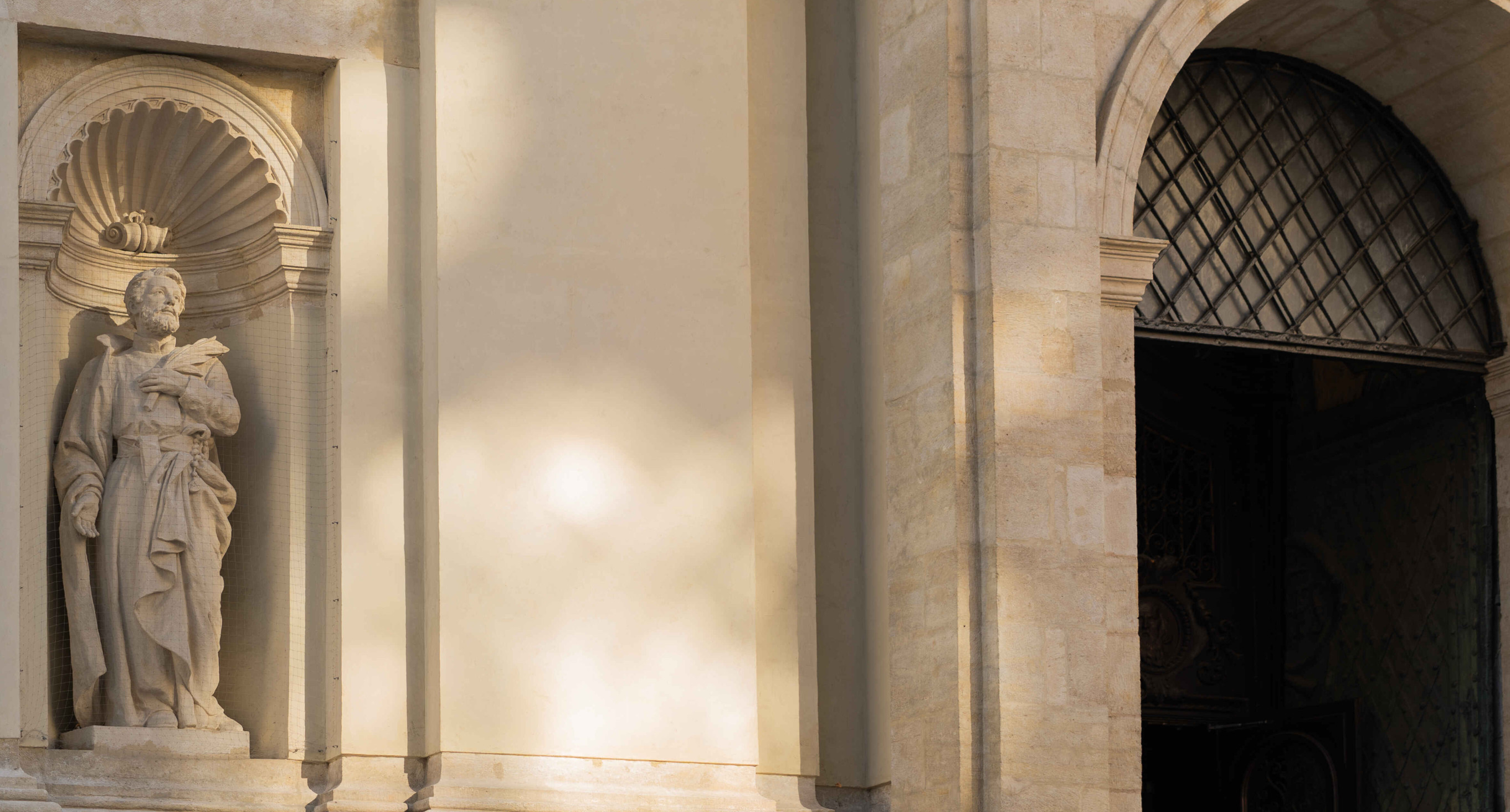
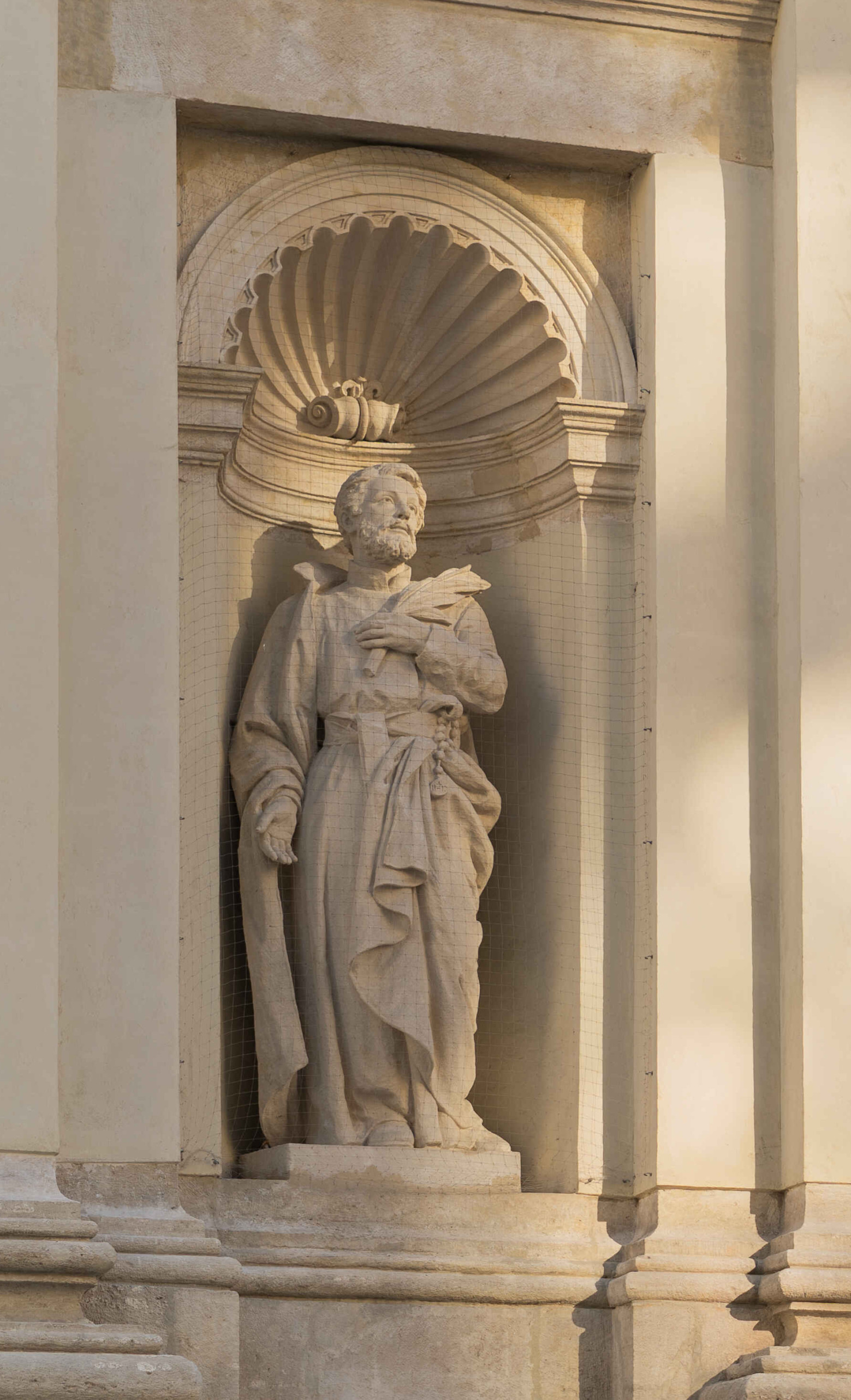
Lviv is a city whose history is literally carved in stone. Its architectural space is a unique palimpsest, where layers of dynamic Baroque, rational Classicism, and monumental Historicism overlap, forming a unique visual code. This rich heritage is the result of the work of the outstanding Lviv school of sculpture, which combined Western European academic traditions with powerful local influences and unbridled expression.
Here is a selection of the most famous Lviv sculptors who have shaped the face of the city over the centuries
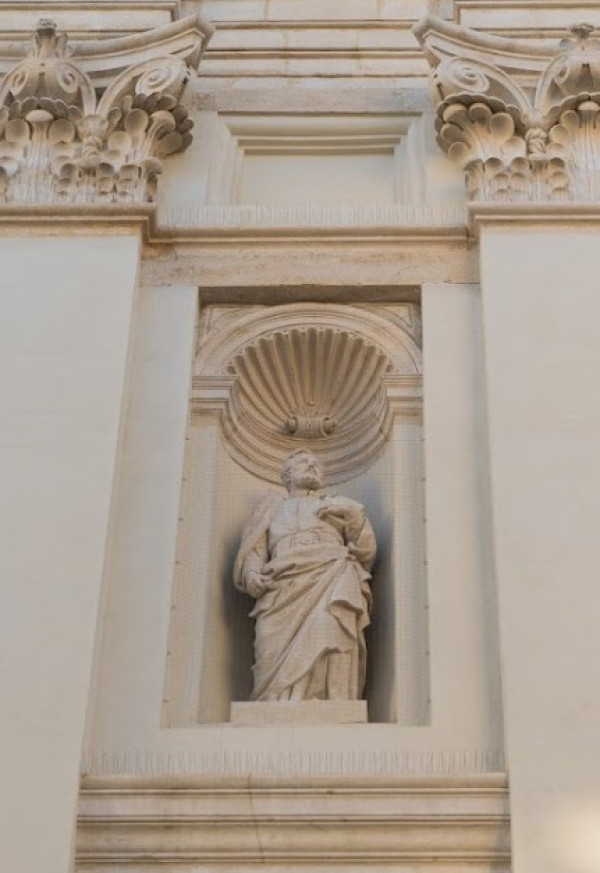
Jan Pfister: Herald of Baroque Splendor
The first signs of a new style in Lviv sculpture appeared at the beginning of the 17th century with the arrival of the Baroque. One of the central figures of this transition was Jan Pfister, whose work balanced between late Mannerism and early Baroque. His key contribution is associated with the decoration of the Jesuit Church (now the Church of Sts. Peter and Paul), which became the first monument of Baroque architecture in Lviv. This laid the foundation for monumental sacred carving and created a demand for masters willing to work in a new, more dynamic style. It was thanks to these early experiments that the artistic community of Lviv was ready to embrace the revolutionary mature Baroque style a century later.
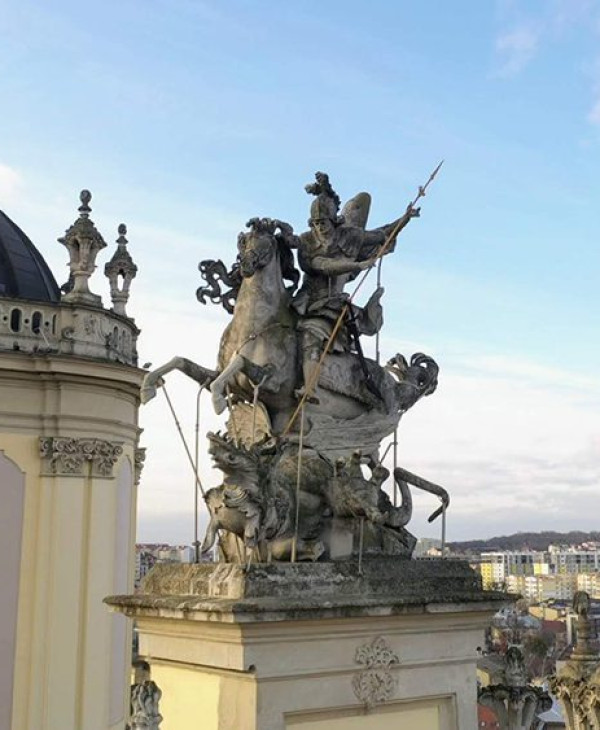
Johann Georg Pinsel: Master of Dramatic Movement
The undisputed pinnacle of Lviv Baroque and Rococo is the work of Johann Georg Pinsel. This enigmatic sculptor, whose life is still shrouded in mystery, worked in the mid-18th century, creating a style distinguished by unrestrained expression, dynamism, and the use of sharp, broken folds that enhanced the play of light and shadow.
Pinsel's main masterpiece in Lviv, which defines the face of the city, is the sculptural group of St. George the Dragon Slayer on the facade of St. George's Cathedral. The composition, full of energy and movement, demonstrates the artist's skill in conveying a dramatic moment. Researchers can study the master's approach thanks to the preserved modelletto (preliminary model) of “Saint George.” This model reveals Pinzel's characteristic technique: the horse's tail twisted into an S shape, resembling a flame. This element was repeated in the final stone sculpture on the facade of the cathedral, emphasizing the consistency of his creative style.
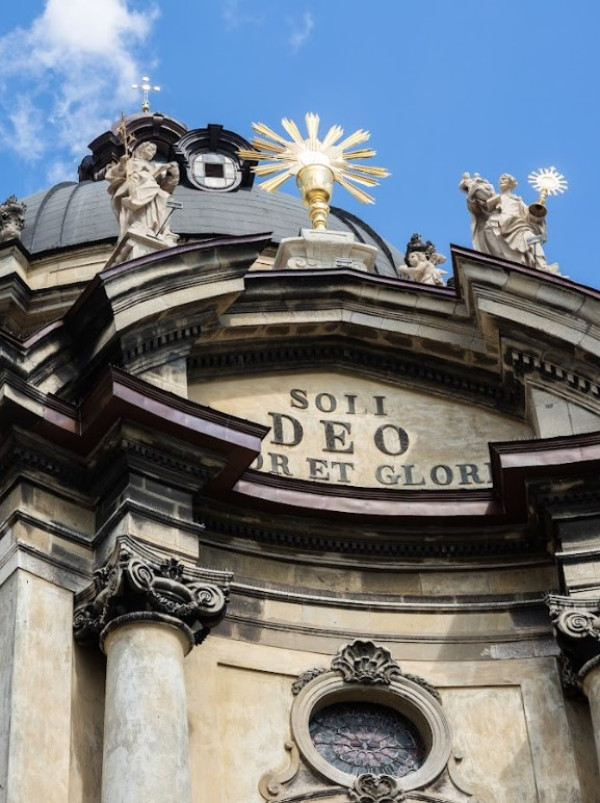
Anton Osynskyi
In the second half of the 18th century, sculpture in Lviv developed through large workshops that fulfilled large-scale orders for the decoration of numerous sacred buildings. Among them, Anton Osinsky stands out, whose works are central to the decoration of the Dominican Cathedral. The master's style is distinguished by greater restraint, which is not characteristic of the Baroque style.
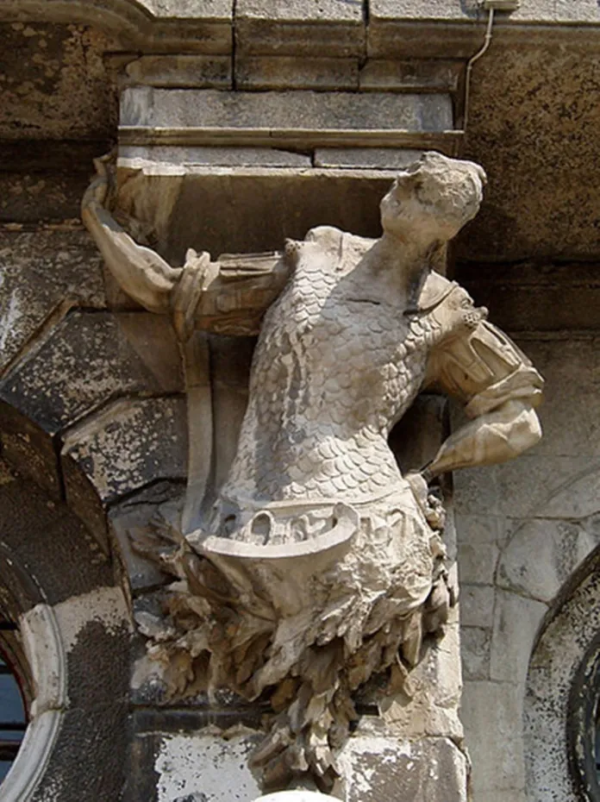
Franciszek Olenskyi
Franciszek Olenskyi belongs to the younger generation of Lviv Baroque, which was formed after Pinzel. His work is a significant contribution to the history of art and culture in Ukraine, as he became a stylistic bridge between mature Baroque and subsequent Classicism.
Olensky continued Pinzel's traditions, particularly in the use of geometric forms, but at the same time actively introduced his own individual approach, more carefully reproducing nature, especially in his treatment of naked human bodies. After Pinzel's death, Olensky probably continued his work in Buchach, and in 1773 he began a fruitful period in Lviv, working on the renovation of the interior of the Latin Cathedral. By 1779, he had created some ornaments, a cardinal's throne, four wooden altars, and four large (about 3 m high) stucco figures of the evangelists, although the latter works have not survived.
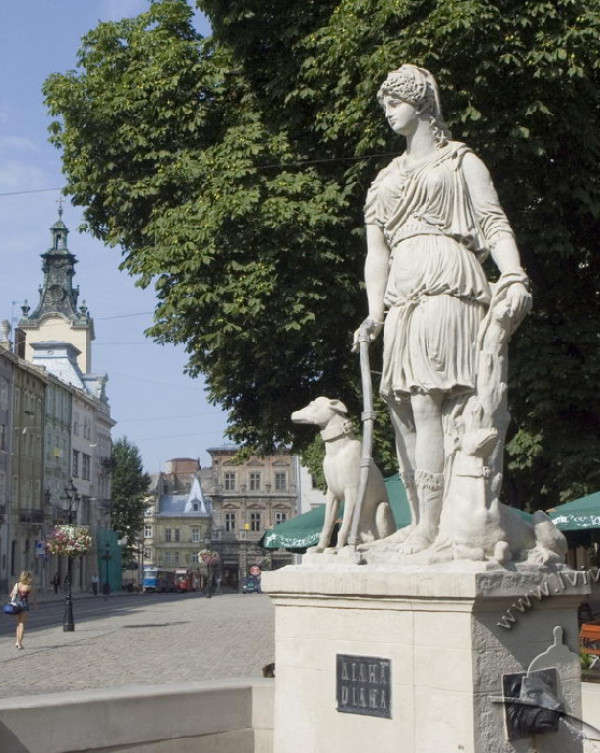
Garman Witwer
After the Austrian authorities arrived in 1772, the art of Lviv underwent a fundamental reorientation. The emotional excesses of the Baroque were replaced by the rationality and classical harmony of Classicism. The main proponent of this style was Garman Witwer, who designed the civic center of the city.
The hallmark of his work, and an indisputable symbol of Lviv, are the four fountains on Market Square. These fountains, which have octagonal bowls with stars made of black and red stones, are crowned with ancient statues. They are not just decoration; their iconography symbolizes the transition from religious to secular, public, and educated culture, reflecting the changing priorities of the authorities.
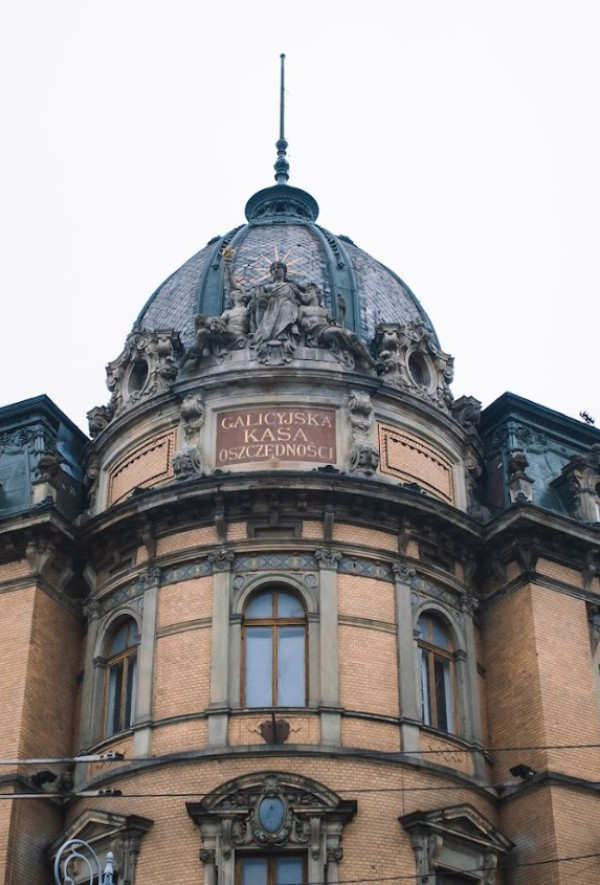
Leonard Marconi: Architectural Decorator and Academic Master
The end of the 19th century was a period of rapid development for Lviv, when the city acquired imperial splendor. This era, known as Historicism, demanded monumental and decorative sculptures to adorn new administrative and educational buildings.
The name Leonard Marconi is perhaps the most frequently mentioned in the context of architectural decoration in Lviv in the last third of the 19th century. He was a key figure in shaping the monumental appearance of large public buildings. Marconi was a professor at Lviv Polytechnic, a teacher of drawing and modeling, and had a significant influence on an entire generation of local sculptors.
His key monumental works include attic sculptural groups for such iconic buildings as the Galician Savings Bank (now the Museum of Ethnography and Artistic Crafts), the Lviv Polytechnic Institute, and the Regional Court Building (now one of the buildings of the Polytechnic).
He also decorated the facades and interiors of the Galician Sejm (now the main building of Ivan Franko University) and the George Hotel. Marconi's work was the embodiment of the financial and political power of Galicia during this period. However, his professional career was controversial: he was accused of protectionism and usurpation of large carving works, and court cases continued even after his death.
Anton Popel
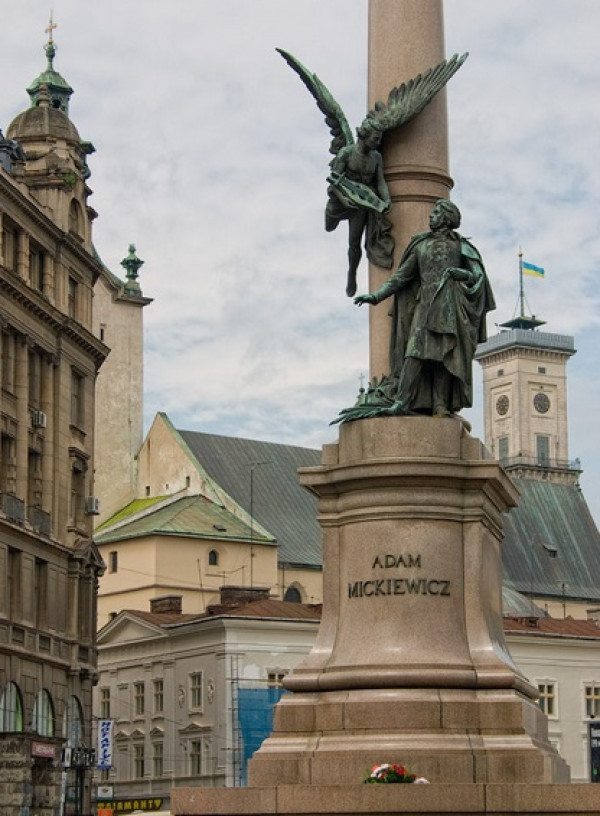
Anton Józef Popel was one of the leading sculptors who worked successfully in the capital of Galicia at the turn of the 19th and 20th centuries. His works are marked by the influence of neo-baroque, academicism, and verism. Popiel received a thorough education, studying at the Krakow School, the Vienna Academy of Arts, and the Florence Academy of Arts.
The monumental zenith of his work is undoubtedly the Adam Mickiewicz Monument (1904) on Svobody Avenue, which remains a world-famous work and a powerful Polish national symbol. Located on the central avenue, this monument became the ideological center of the city at that time. The international dimension of his talent is also highlighted by the creation of the monument to Tadeusz Kościuszko in Washington, D.C., which shows that Lviv's academic masters were part of a broad European and global artistic context. Among his other works is the monument to Kornel Ujski, which is now located in Szczecin.
Tadeusz Baroncz
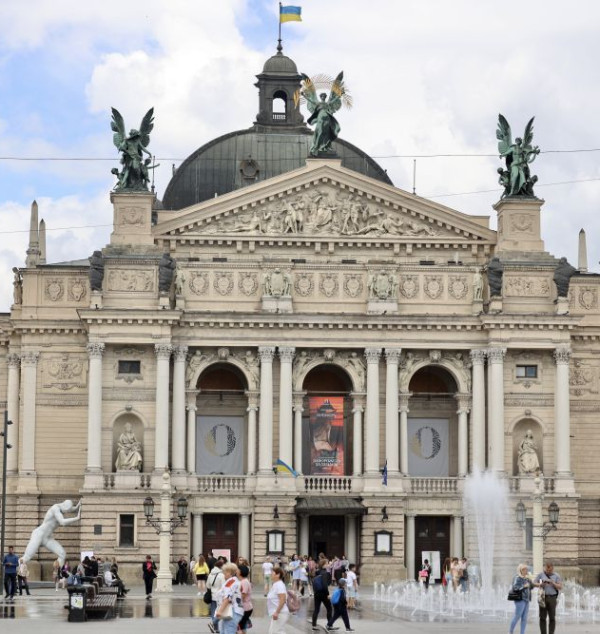
A descendant of a distinguished family of Galician Armenians, his talent was described by his contemporaries as “great, original, and independent.” His works, including a monumental sculptural group, adorn the building of the Galician Savings Bank, complementing the decor begun by Leonard Marconi. A significant part of his legacy is preserved in the Lviv Art Gallery, where it was transferred by the sculptor's brother after his untimely death. In addition, Baronch is the author of a number of expressive tombstones in the Lychakiv Cemetery, as well as sculptures of Melpomene and Thalia on the facade of the Opera House.
Interesting fact: in 1877, Tadeusz Baroncz created a sculptural portrait of Taras Shevchenko, which he donated to the Taras Shevchenko Society in Lviv. The artist allowed copies and reproductions of his sculpture to be made for sale in order to raise funds for a monument to the Ukrainian poet.
In addition, he is the author of three monuments to King Jan III Sobieski of Poland. One of them, made of bronze, is strikingly similar to the monument to Bohdan Khmelnytsky in Kyiv. It was installed on what is now Freedom Avenue, but in 1950 it was taken to Poland, where it still stands today in the city of Gdańsk.
Tadeusz Baroncz
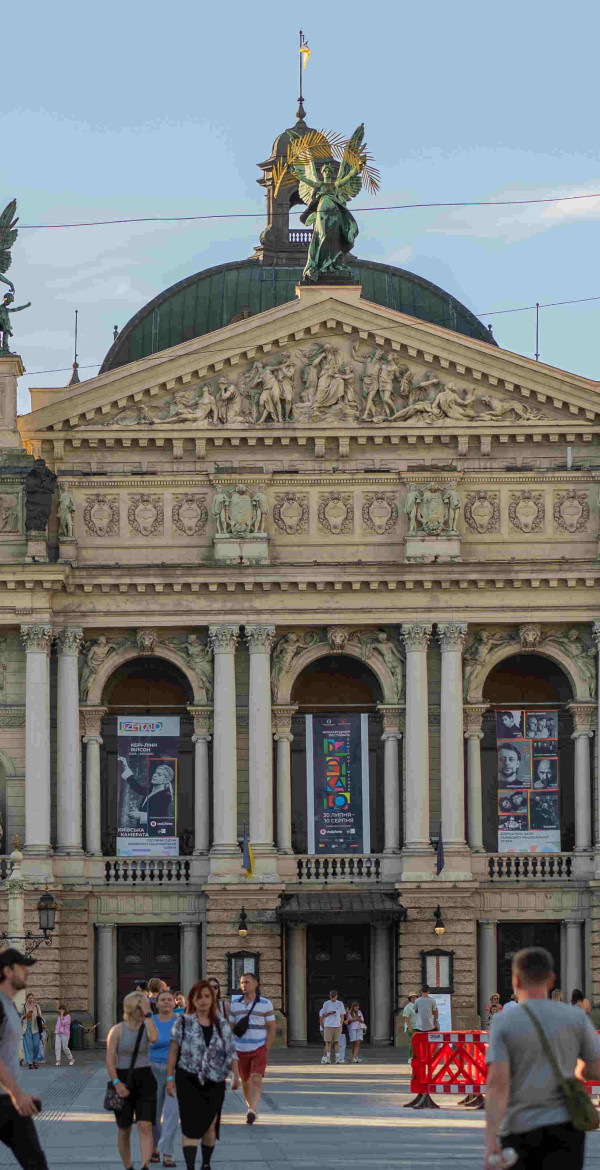
A descendant of a distinguished family of Galician Armenians, his talent was described by his contemporaries as “great, original, and independent.” His works, including a monumental sculptural group, adorn the building of the Galician Savings Bank, complementing the decor begun by Leonard Marconi. A significant part of his legacy is preserved in the Lviv Art Gallery, where it was transferred by the sculptor's brother after his untimely death. In addition, Baronch is the author of a number of expressive tombstones in the Lychakiv Cemetery, as well as sculptures of Melpomene and Thalia on the facade of the Opera House.
Interesting fact: in 1877, Tadeusz Baroncz created a sculptural portrait of Taras Shevchenko, which he donated to the Taras Shevchenko Society in Lviv. The artist allowed copies and reproductions of his sculpture to be made for sale in order to raise funds for a monument to the Ukrainian poet.
In addition, he is the author of three monuments to King Jan III Sobieski of Poland. One of them, made of bronze, is strikingly similar to the monument to Bohdan Khmelnytsky in Kyiv. It was installed on what is now Freedom Avenue, but in 1950 it was taken to Poland, where it still stands today in the city of Gdańsk.

