

Lviv is a city with centuries of history, where grand historical events unfolded alongside unforgettable love stories. Its romantic legends tell of forbidden passions, heartfelt letters, duels of honor, and feelings so powerful they withstood the test of time.
Discover the love stories of Lviv and explore the city’s most romantic spots — places that still hold the memory of emotions strong enough to change destinies.
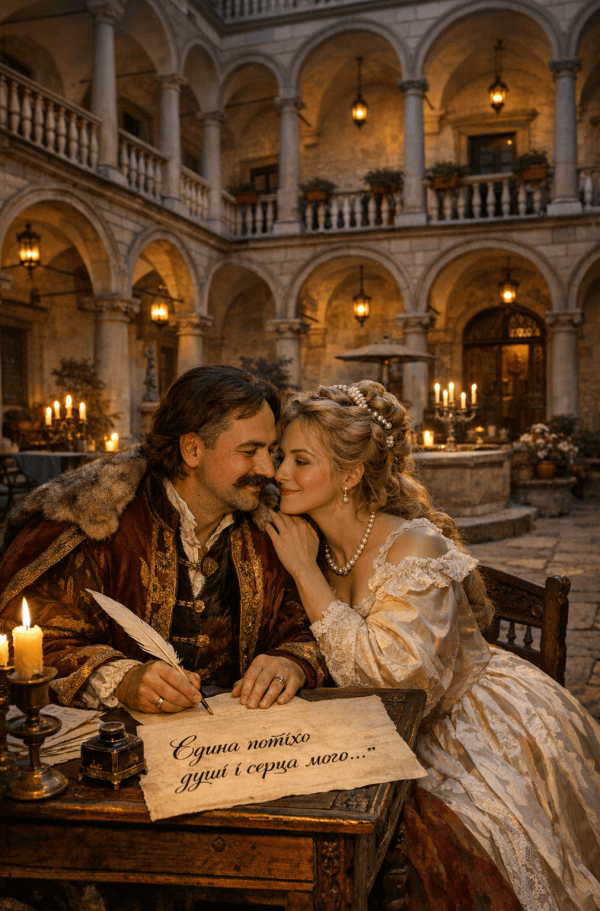
“The Only Consolation of My Soul and Heart”
(A touching love story of King of the Polish–Lithuanian Commonwealth Jan III Sobieski)
Location: Korniakt House, Rynok Square 6
Their story began in 1655 in Warsaw. Jan Sobieski — the future king and hero of the Battle of Vienna in 1683 — fell in love with a young Frenchwoman at court, Marie Casimire d’Arquien, his beloved Marysieńka. However, in 1658 she was married off to the magnate Jan Zamoyski.
For nearly seven years, they maintained a secret correspondence. Only after Marie’s husband died in 1665 were the lovers finally able to marry. In 1674 Sobieski became king, yet even amid wars and affairs of state, he remained a tender and devoted husband.
He wrote nearly four thousand letters to his wife — filled with longing, jealousy, care, and passion. Lviv was one of the cities where the royal couple often stayed. In the Korniakt House on Rynok Square, they found peace in the midst of the bustling city.
Today, strolling through the Renaissance arcaded courtyard, it is easy to imagine the king stepping away from matters of state to sit at his writing desk and once again address his wife:
“The only consolation of my soul and heart…”
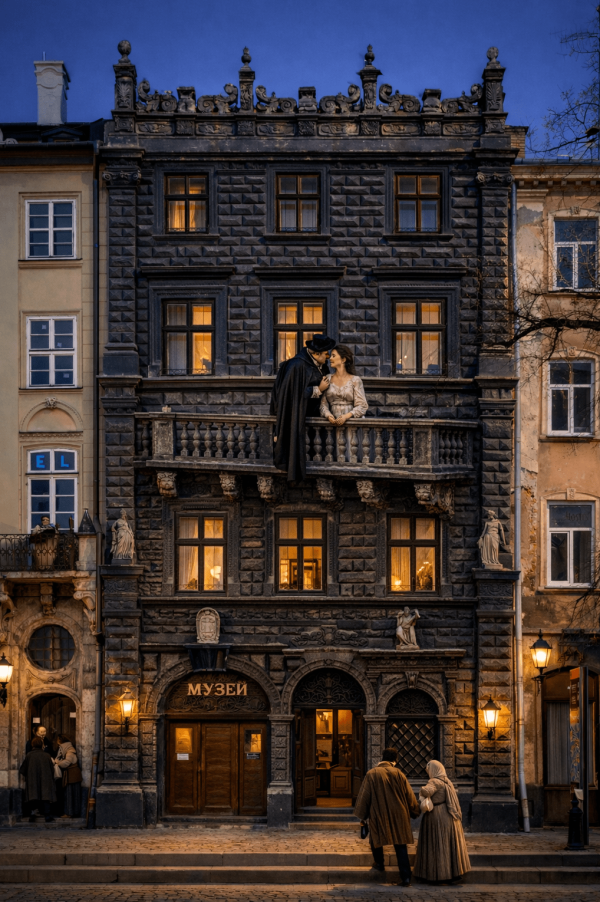
The Mysterious Suitor and the Black House
Location: Chorna Kamianytsia, Rynok Square 4, Lviv
In the late 16th century, at the height of Lviv’s Renaissance prosperity (around 1588–1589), one of the most remarkable buildings on Market Square was completed — the Black House. It is associated with a wealthy Italian merchant who sought not only to establish his prominence in the city, but also to win the heart of a young Lviv noblewoman.
Legend has it that he chose an unusual dark stone for the façade to make the residence truly stand out. Soon, rumors spread throughout the city: locals whispered that the blackened walls concealed not only wealth, but also the owner’s “dark” secrets. In truth, the dramatic color is simply the result of time and the natural oxidation of limestone — though the mystery still adds to its charm.
The townhouse was lavishly decorated, featuring exquisite carvings and elegant Renaissance details. Yet despite its beauty, the lady remained unmoved. The Italian merchant’s love was never returned.
Today, the Black House is one of the most iconic landmarks on Market Square and part of the Lviv Historical Museum. It remains a timeless reminder that even the grandest gesture cannot guarantee love.
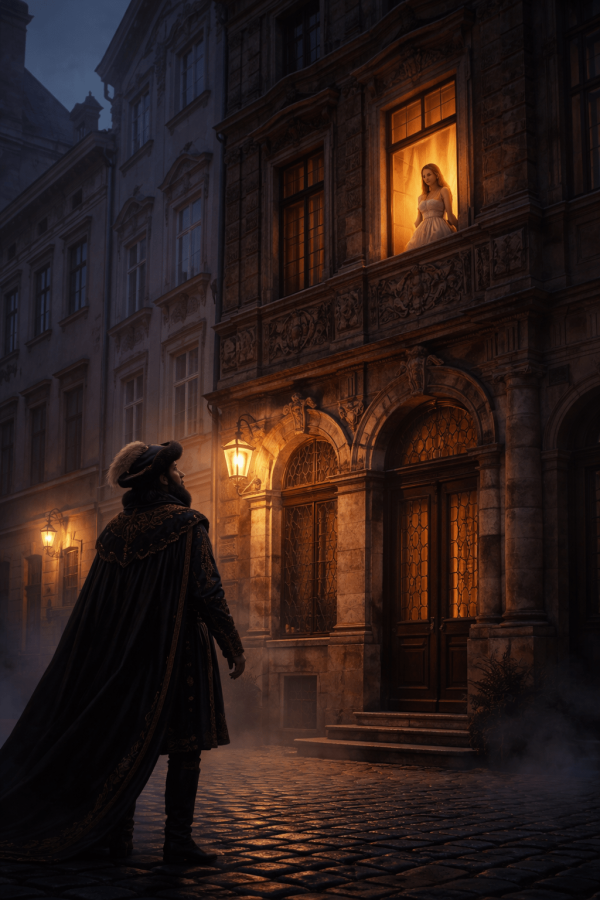
The Forbidden Love of a King
Location: Rynok Square, 30
In 1634, King Władysław IV Vasa of the Polish–Lithuanian Commonwealth was staying in Lviv after a military campaign against Muscovy. According to a city legend, it was here — on Market Square — that he noticed an exceptionally beautiful young woman in a townhouse window. Her name was Jadwiga Łuszkowska, the daughter of a Lviv merchant. The king is said to have fallen in love at first sight.
Władysław brought Jadwiga to Warsaw, affectionately calling her “Jadwiczka.” Yet marriage was impossible: the Polish–Lithuanian nobility would never have accepted a merchant’s daughter as queen. Some even whispered that she had enchanted the monarch.
The king acknowledged their son, Władysław Konstanty Vasa (born in 1635), granting him the title of count. Jadwiga was later married off to a nobleman from Mazovia and settled near Warsaw. Despite this, the king is believed to have continued visiting her.
On May 20, 1648, Władysław IV died — according to legend, in her arms. This 17th-century story is a reminder that even a king cannot always choose love over duty to the state.
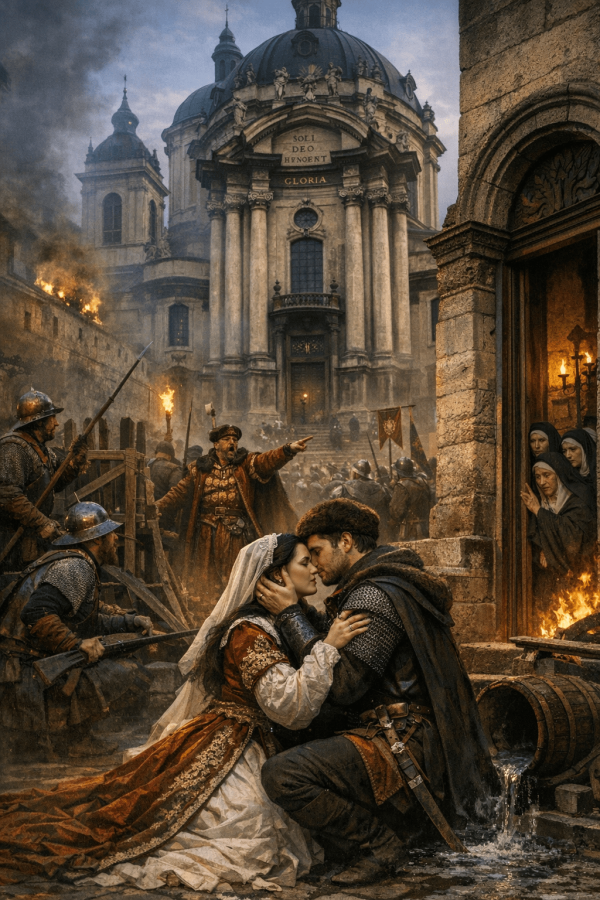
A War in the Name of Love
Location: Dominican Church and Monastery (now the Church of the Most Holy Eucharist), 3 Muzeina Square
In the mid-16th century, Lviv was a key city of the Polish–Lithuanian Commonwealth, where the interests of powerful nobles, clergy, and the Crown intertwined. Around 1559, Halshka (Elżbieta) of Ostroh — one of the wealthiest heiresses in the realm — fled here seeking refuge.
She had been forced into marriage with the influential magnate Łukasz Górka. Refusing to accept this union, Halshka and her mother sought sanctuary within the Dominican monastery in Lviv. Enraged, Górka launched what was effectively a siege of the monastery, demanding the return of his wife.
Within the monastery walls, Halshka managed to secretly marry the man she truly loved — Prince Simeon of Slutsk. Their happiness was short-lived. By royal order, the city’s water supply to the monastery was cut off. Forced to surrender, Halshka was imprisoned in the High Castle and later returned to her lawful husband.
Her life ended tragically, marked by isolation and separation from her beloved. And despite his relentless pursuit of both his wife and her fortune, Górka ultimately gained nothing — the couple had no children, which under the laws of the time deprived him of any claim to her estates.
Today, the magnificent Baroque church on Muzeina Square stands as a silent witness to one of the most dramatic love stories of the 16th century — a story that proves that, at times, love itself became a cause for war.
A Love Above the City
Location: Lviv Town Hall, 1 Rynok Square
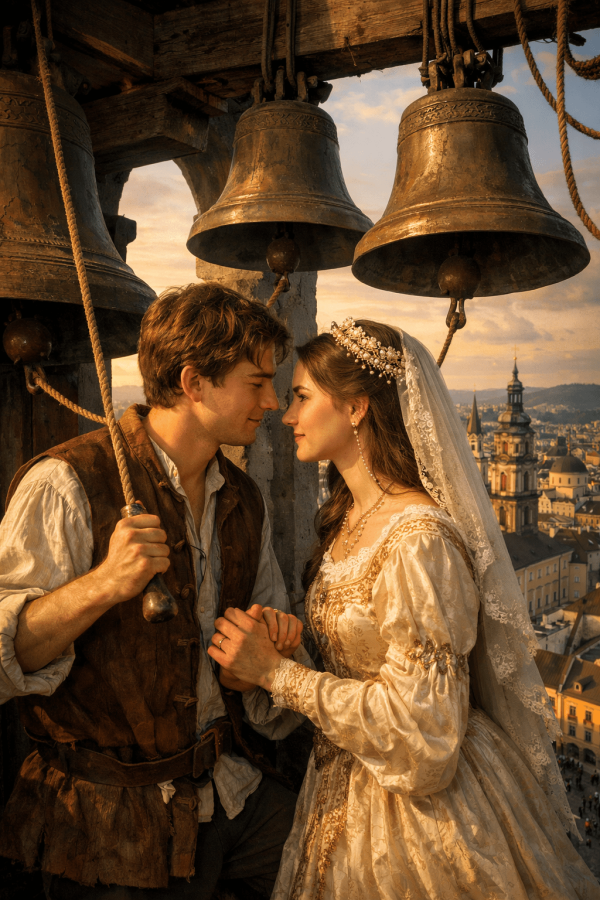
A 17th-century city legend tells the story of a young bell-ringer who fell in love with a noblewoman. They would meet atop the Town Hall tower, high above Rynok Square. It is said that he played special melodies on the bells just for her — their own secret language of love, carried across the rooftops of Lviv.
But social boundaries proved stronger than their feelings. The young woman’s family would never allow her to marry a simple bell-ringer. The lovers were forced to part.
Today, as you climb the tower of Lviv Town Hall and take in the sweeping view over the city, you might recall this story — a reminder that in Lviv, love has always reached great heights.
Lviv’s Romeo and Juliet
Location: Area of Horodotska & Sholem Aleichem Streets / Fountain monument on Lazneva Street (opposite Hotel Lviv)
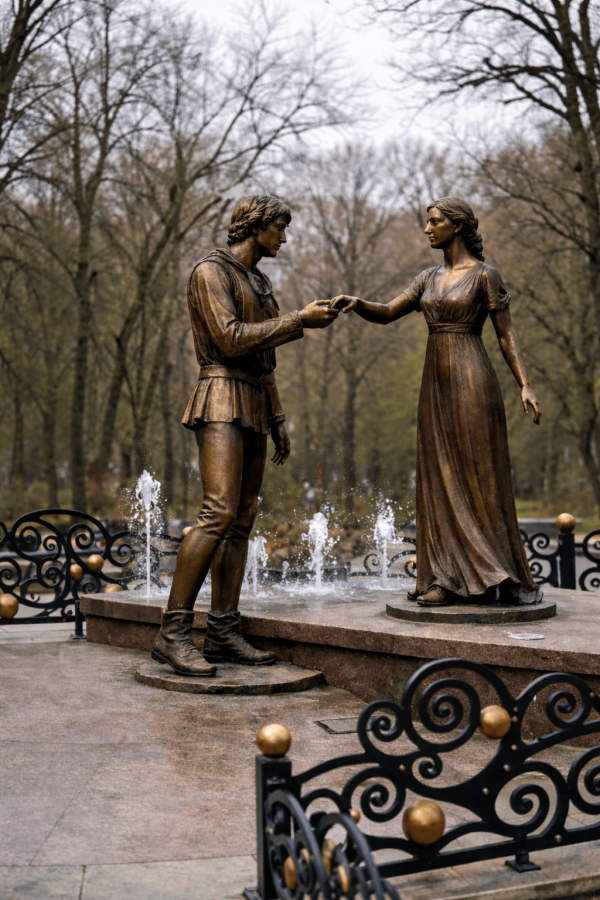
This story dates back to the 16th century and was recorded in the chronicle Triplex Leopolis. In multicultural Lviv, two young people fell deeply in love: Paolo Mikellini, the son of an Italian Catholic merchant, and Pelagia Krasovska, the daughter of a wealthy Orthodox townsman.
Their relationship was almost impossible from the start. Divided by faith and pressured by their families, the lovers were separated. Paolo was sent away with a trading caravan to Venice. When he finally returned, Lviv was suffering from a devastating plague. Pelagia had fallen ill and was taken beyond the city walls to the so-called “Garden of the Sick,” near today’s Krakivskyi Market.
Paolo managed to reach her and stayed by her side, caring for her until her final breath. Soon after, he too passed away. Because they belonged to different faiths, they were buried separately, near two churches that have not survived to this day.
In 2012, a fountain monument was installed on Lazneva Street in memory of their story. Today, it reminds visitors that true love can overcome division — and that even death cannot defeat it.
A Romantic Love Story: Artur Grottger and Wanda Monné
Location: 23-a Lysenka Street (former Riflemen’s Hall) / Lychakiv Cemetery, Field No. 5
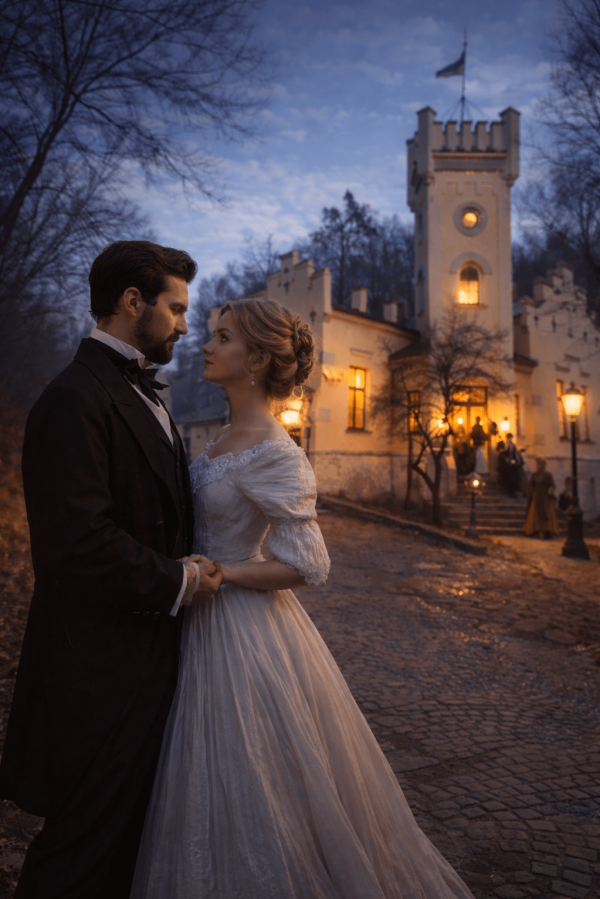
On January 13, 1866, a citizens’ ball took place at the Riflemen’s Hall in Lviv (today home to the Museum of the Liberation Struggles of Ukraine). That evening marked the beginning of a great love story. It was here that 29-year-old artist Artur Grottger met 16-year-old Wanda Monné. She soon became his muse, his inspiration, and his fiancée.
Struggling financially, Grottger left for France in 1867, hoping to gain recognition in Europe. He worked tirelessly, lived in poverty, and wrote tender letters to Wanda. During this period, he created his renowned cycle War, later presented in Paris. But illness — tuberculosis — proved stronger than ambition. On December 13, 1867, Grottger died in the French spa town of Amélie-les-Bains.
Determined to bring him home, Wanda sold her jewelry to transport his body back to Lviv. On July 4, 1868, he was reburied at Lychakiv Cemetery. Her ring and her letters were placed in his coffin. The tomb monument was sculpted by Italian artist Paris Filippi, and the portrait of Grottger on the memorial was drawn by Wanda herself.
Though she later married, Wanda continued to visit Lychakiv Cemetery for the rest of her life — returning to the memory of her first and greatest love.
The Wife of Two Counts
Location: Maria Zankovetska National Academic Ukrainian Drama Theatre (former Skarbek Theatre)
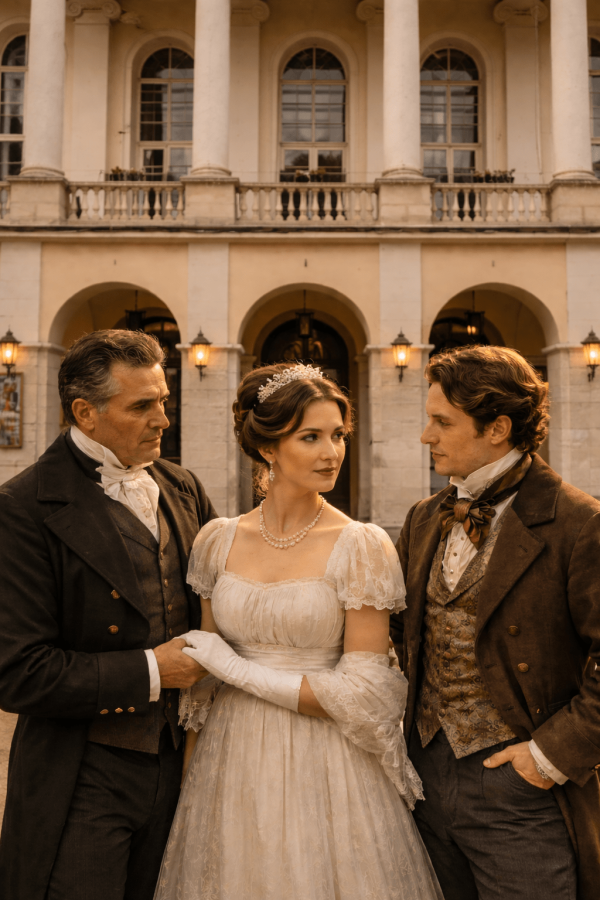
The story of Zofia Jabłonowska is a love drama set in early 19th-century Lviv. In 1814, at one of the city’s grand balls, Count Stanisław Skarbek — a wealthy entrepreneur and future patron of the arts — noticed the young Zofia from the noble Jabłonowski family. Despite her family’s opposition, she became his wife.
Skarbek went down in history as the founder of a great municipal theatre: construction began in 1833, and on March 28, 1842, the theatre was ceremoniously opened. Today it is known as the Maria Zankovetska National Academic Ukrainian Drama Theatre.
Yet Zofia’s married life was far from happy. In 1817, she met the young playwright Aleksander Fredro — a veteran of the Napoleonic wars and already a recognized author. Their feelings were mutual. However, their path to marriage lasted nearly eleven years, hindered by her first husband and complicated family circumstances.
Only in 1828 were Zofia and Fredro finally able to marry. They kept their letters until old age and burned them shortly before their deaths — so that their love story would remain known only to them.
Today, the theatre in the heart of Lviv reminds visitors not only of Skarbek’s patronage, but also of the woman who became the wife of two counts and chose love against all odds.
A Symbol of Princely Love
Location: Church of St. John the Baptist, 1 Staryi Rynok Square
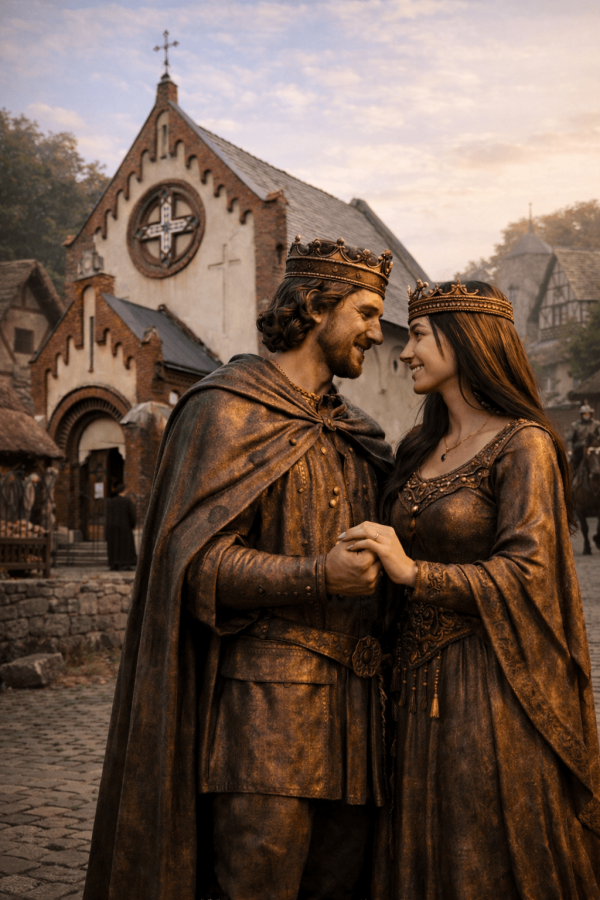
One of the oldest churches in Lviv is linked to the city’s very founder — Prince Lev I of Galicia (c. 1228–1301). According to legend, in the second half of the 13th century he commissioned the Church of St. John the Baptist as a wedding gift for his wife, Constance, daughter of the Hungarian King Béla IV, shortly after their marriage.
Historians treat this version with caution, as the exact date of the church’s construction remains debated. Yet local tradition preserves a romantic explanation: that one of Lviv’s earliest stone churches was born out of love.
Today, as you stroll through Staryi Rynok Square — the oldest part of the city — it is easy to imagine princely Lviv in the 13th century. The church still stands as a quiet symbol of devotion and, according to legend, of the love story from which the City of the Lion began.
A Duel in the Name of Love
Location: Rynok Square, 3 (Lviv)
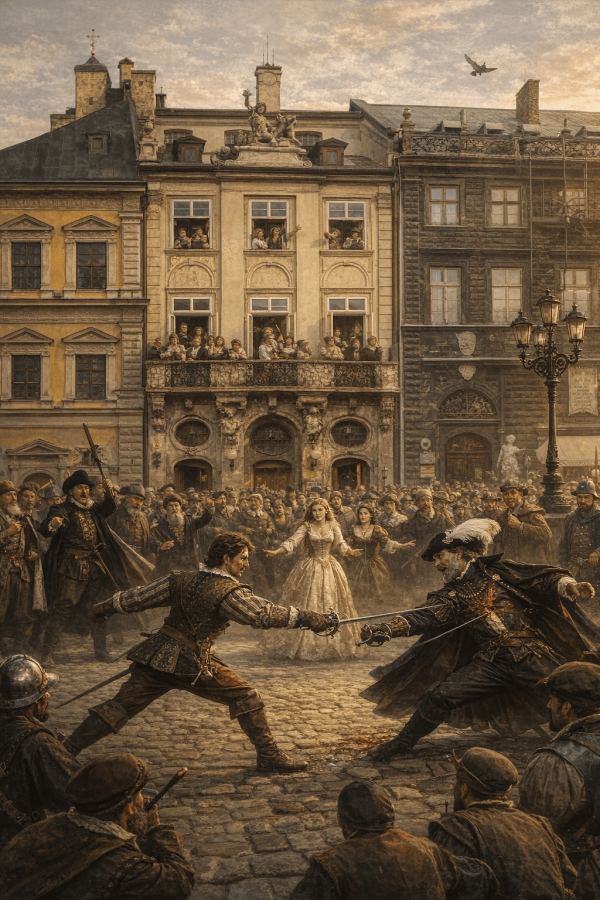
This story comes from The Chronicles of Lviv by Bartłomiej Zimorowic and takes us back to the year 1579. That was when the Florentine Urbano Ubaldini arrived in the city. After obtaining Lviv citizenship, he quickly became a successful entrepreneur and banker — and even more quickly fell in love with 18-year-old Hanna Wilczkówna, who lived in a townhouse on Rynok Square.
However, Urbano had a powerful rival — the Lviv patrician and burgomaster Paweł Jełonek. The conflict escalated during a ball when Hanna refused Paweł a dance. Offended, the magistrate slapped the Italian — and the dispute led to a duel. Urbano mortally wounded his opponent with a rapier.
He faced execution. Yet before his death, Paweł admitted his own guilt and asked that the young man not be punished. After a lengthy trial, which even reached the king, Urbano was acquitted. He later married Hanna.
Thus, in the very heart of Lviv, love became a matter of honor — quite literally.

